Clean WordPress builds for international clients, from someone who has spent six years working across time zones and knows what actually goes wrong.
The real risk in hiring offshore isn't the rate.
Most people considering a developer in Southeast Asia are quietly weighing one thing: what happens if this goes wrong. Not the price — the recovery cost. The rate looks attractive until you imagine explaining to your board why the site is half-finished and the developer has stopped replying.
That fear is usually well-founded, but it is aimed at the wrong target. The projects I have been called in to rescue did not fail because the developer was offshore. They failed because nobody wrote down what was being built, nobody owned the licences, and nobody could read the code afterwards.
So I build with the assumption that you will eventually want to leave. Licences in your name. Hosting in your account. As few plugins as possible. A structure the next developer can read without calling me. If that makes me easier to replace, good — that is the point.
No multipurpose theme, no overlapping plugins. Only what the project actually uses.
Custom post types and fields shaped around your content, so adding to it feels obvious rather than improvised.
Images, caching, and asset loading handled during the build — not patched with a plugin at the end.
Heading structure, schema, sitemap, and URLs correct from day one.
Domain, hosting, and licences in your name. I help set them up; the accounts are yours.
A recorded walkthrough and written notes, so whoever inherits this has something to work from.
I work GMT+7 and keep deliberate overlap with European mornings. Async by default, with written updates you can read on your schedule.
The right column matters as much as the left. I would rather lose the project here than have us both discover it in week five.
3–6 weeks for a new site. Redesigns with content migration usually take longer, depending on how much legacy content exists.
If a site exists: what can be salvaged, what has to go. If not: content structure first.
Content model and page hierarchy agreed before any visual work begins.
Theme development, content migration, and redirect mapping if URLs change — so existing rankings survive.
Access, licences, and documentation transferred fully to you.
Indicative conversion only; quoted and invoiced in IDR. Depends on page count, content structure, and whether there is a migration.
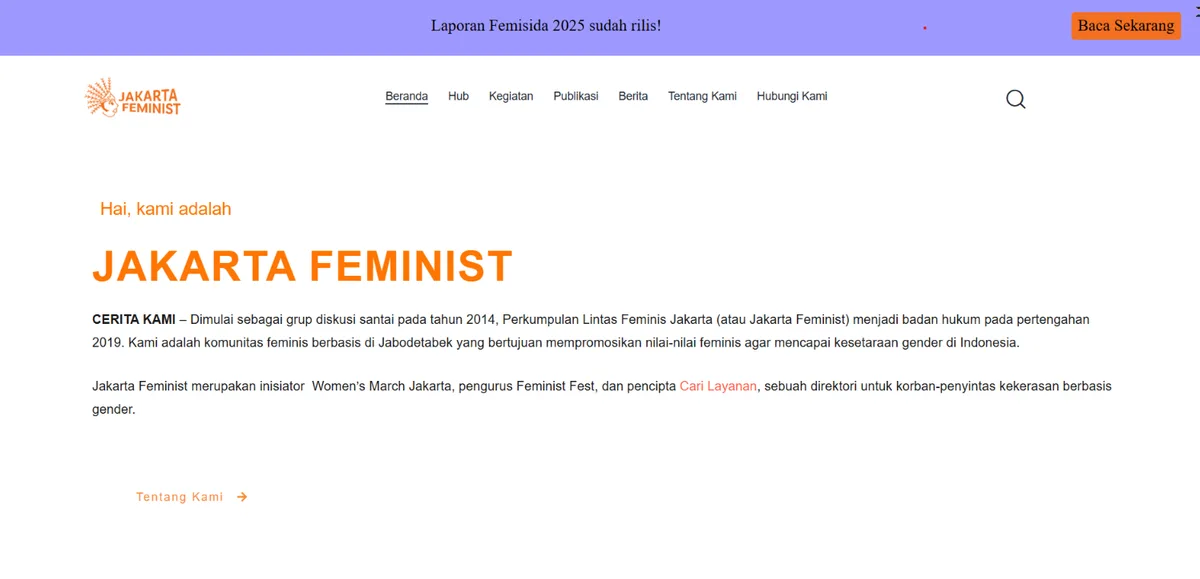
A feminist organisation strengthening its advocacy. I consolidated editorial content, events, and resources into a single mobilisation hub — migrating from Wix Editor to WordPress, supporting Women's March Jakarta, FemFest, and more.
View site ↗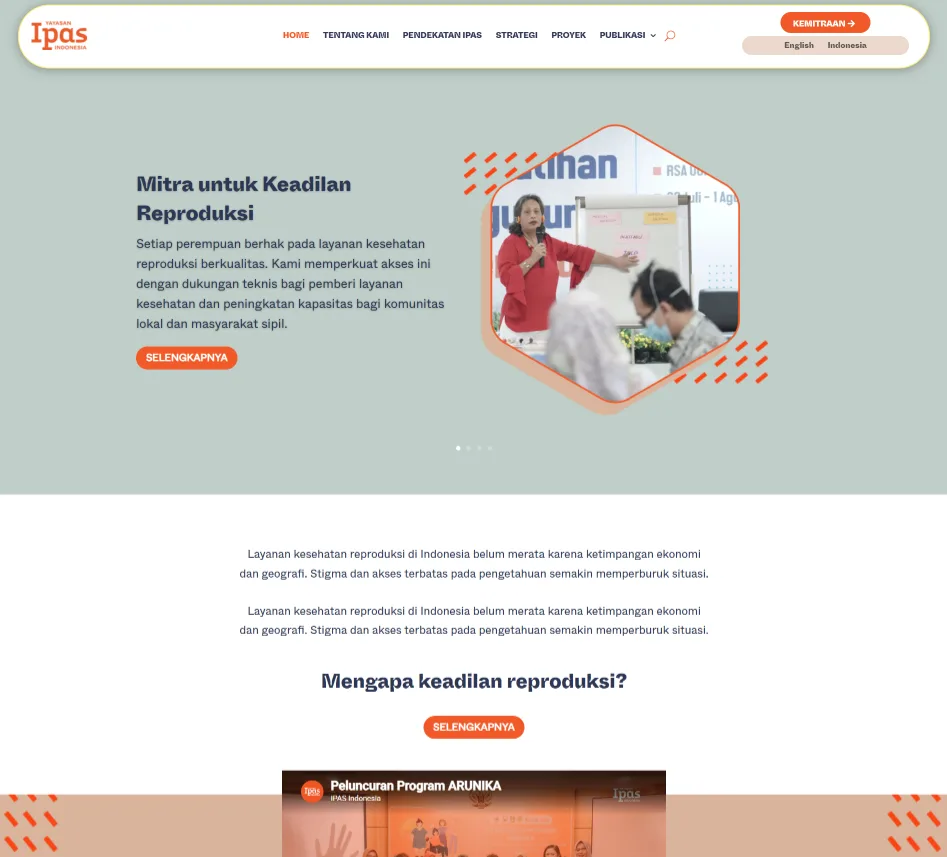
A reproductive health NGO expanding access to safe post-abortion care. Their old site had drifted away from the new international design system. I rebuilt it to align with the global brand without sacrificing what the Indonesian audience responds to.
View site ↗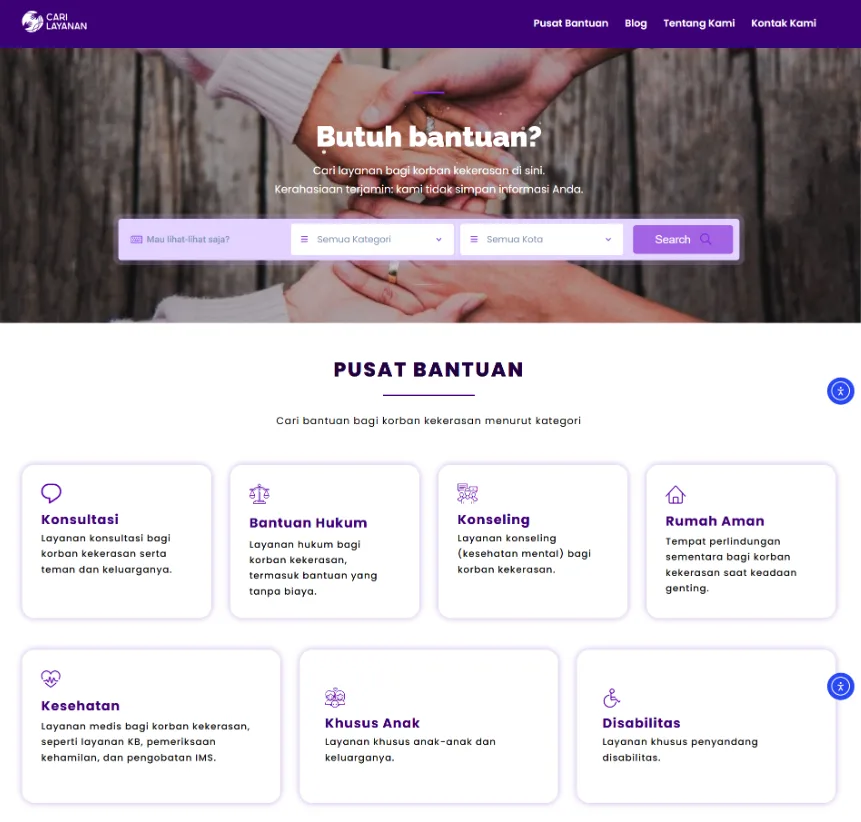
A crisis directory for survivors of gender-based violence during COVID-19. I built a WordPress directory mapping verified services by location and need — confidential, immediately accessible, and able to scale to thousands of users.
View site ↗See the full portfolio — with the reasoning behind each decision.
I work GMT+7, which overlaps with European mornings and does not overlap much with the Americas. I treat that as a constraint to design around rather than hide: written updates you can read whenever, decisions batched instead of drip-fed, and scheduled calls inside the overlap. In practice most clients find fewer, better-prepared calls preferable to constant availability.
Yes — Jakarta Feminist was a Wix Editor to WordPress migration. The part that decides whether a migration succeeds is not moving the content, it is mapping old URLs to new ones with correct redirects. Skip that and years of accumulated ranking can disappear overnight.
You can, without asking me. Domain, hosting, and licences are in your name from the start, and the build is deliberately readable by someone else. A site only its author can touch is not an asset — it is a trap, and I do not build them.
The rate reflects where I live, not how I work. Costs in Indonesia are lower than in London or Sydney, so the same work costs you less without costing me more. What you should actually check is the work itself — the portfolio on this site includes clients in Tanzania, Mumbai, London, and Jakarta, and you can visit every one of them.